JAVA FULL STACK
COURSE IN HYDERABAD
Become a Job-Ready Java Full Stack Developer
Build real-world applications, create a strong developer portfolio, prepare for technical interviews, and get career & placement assistance from AIDEAS Academy.
Get the complete syllabus + batch details + fee information
Our Alumini Work At




















Why Learn Java Full Stack in 2026?
Don't Learn Just Java. Learn How to Build Complete Applications.
Knowing Java syntax is only the beginning.
Companies need developers who can work across the application stack from frontend interfaces and backend APIs to databases, deployment and modern AI integrations.
Our Java Full Stack program takes you from programming fundamentals to building and deploying complete web applications.
Frontend interfaces + Backend microservices + Real databases + Production cloud orchestration.
Complete Developer Stack

Java
Build a strong programming foundation.

Spring Boot
Develop powerful backend applications and APIs.

React JS
Create modern, responsive frontend applications.

SQL & PostgreSQL
Work with real application databases.

REST APIs
Connect frontend and backend systems.

Git & GitHub
Follow professional development workflows.

Docker & Deployment
Learn how applications move from development to production.

AI Integration
Learn how APIs such as OpenAI can be integrated into modern applications.
Want to See the Complete Roadmap?
Get the Java Full Stack Syllabus
Master Java Full Stack
- Introduction to SDLC and its importance in software development
- Phases of SDLC: Requirement gathering and analysis
- Phases of SDLC: System design
- Phases of SDLC: Development
- Phases of SDLC: Testing
- Phases of SDLC: Deployment
- Phases of SDLC: Maintenance and support
- Common SDLC models: Waterfall model
- Common SDLC models: Agile methodology
- Scrum framework overview
- DevOps lifecycle basics
- Comparison of traditional and modern development approaches
- Waterfall methodology overview
- Agile principles and values
- Scrum roles, ceremonies and artifacts
- Kanban basics
- Continuous integration and continuous delivery concepts
- Version control and collaborative development practices
- Business Analyst and requirement analysis
- UI/UX Designer responsibilities
- Frontend Developer role
- Backend Developer role
- Full Stack Developer role
- QA / Software Tester role
- DevOps Engineer role
- Project Manager / Scrum Master role
- Product Owner role
- Introduction to HTML and its role in web development
- How browsers parse and render HTML
- Structure of an HTML document
- DOCTYPE declaration
- HTML tags, elements and attributes
- Block-level and inline elements
- Headings, paragraphs and text formatting
- Hyperlinks and navigation
- Images and multimedia embedding
- Ordered, unordered and description lists
- Tables and tabular data
- Forms and form controls
- Input types and attributes
- Semantic HTML elements
- Header, footer, section, article, nav and aside tags
- Audio and video elements
- Accessibility fundamentals
- ARIA attributes and alt text usage
- SEO-friendly HTML structure and best practices
- Introduction to CSS
- CSS syntax and selectors
- Inline, internal and external styles
- Colors, units and typography
- Fonts and text styling
- Box Model: margin, border, padding and content
- Display properties
- Positioning concepts
- Static, relative, absolute and fixed positioning
- Flexbox layout system
- Grid layout system
- Pseudo-classes and pseudo-elements
- Transitions and animations
- Media queries
- Responsive design breakpoints
- CSS variables
- Reusable and maintainable CSS patterns
- Responsive web design principles
- Mobile-first approach
- Cross-browser compatibility
- CSS architecture concepts
- Naming conventions and maintainability
- Introduction to JavaScript
- JavaScript execution environment
- Variables: var, let and const
- Data types and operators
- Conditional statements
- Loops and control flow
- Functions and arrow functions
- Function parameters and return values
- Objects and arrays
- Array methods such as map, filter and reduce
- JSON format and data handling
- Scope and lexical environment
- Closures
- Hoisting
- Callbacks
- Promises
- Async and await
- Error handling mechanisms
- Document Object Model (DOM)
- DOM manipulation techniques
- Event handling and propagation
- Form validation
- Local Storage and Session Storage
- Destructuring assignment
- Spread and rest operators
- JavaScript modules
- Template literals
- Introduction to Bootstrap framework
- Bootstrap grid system
- Containers and breakpoints
- UI components: buttons, cards, alerts
- Navigation bars and footers
- Forms and modals
- Carousel components
- Utility classes
- Responsive typography
- Customizing Bootstrap styles
- Introduction to React
- Why React is used in modern applications
- Single Page Applications vs Multi Page Applications
- React architecture
- Virtual DOM concept
- Setting up React using Vite and Create React App
- JSX syntax and rules
- Functional components
- Component composition
- Props and data flow
- Reusability of components
- Folder and file structure best practices
- Component state using useState hook
- Event handling in React
- Conditional rendering
- Rendering lists using keys
- useEffect hook
- Side effects management
- useRef hook
- Custom hooks
- Component lifecycle concepts
- React Router fundamentals
- Route configuration
- Dynamic routing
- Protected routes and authentication flow
- Controlled components
- Uncontrolled components
- Handling form inputs
- Validation strategies
- Props drilling challenges
- Context API
- Global state management concepts
- Introduction to Redux Toolkit
- Fetch API
- Axios library
- RESTful services
- Handling loading and error states
- React rendering behavior
- Memoization techniques
- Lazy loading
- Code splitting
- Best practices for scalable applications
- Introduction to TypeScript
- Benefits of TypeScript
- Type system overview
- Primitive and custom types
- Interfaces and type aliases
- Enums and generics
- Typing props and state
- Typing React hooks
- Functional component typing
- Type-safe API interactions
- Utility types
- Type guards
- Advanced generics
- Project-level TypeScript configuration
- Overview of Java and its applications
- Java platform and ecosystem
- Features and advantages of Java
- Java installation and environment setup
- Java program execution flow
- Variables and data types
- Keywords and identifiers
- Operators and expressions
- Input and output operations
- Conditional statements
- Looping statements
- Break, continue and return statements
- Classes and objects
- Constructors
- Instance and static variables
- Methods and method overloading
- Inheritance
- Polymorphism
- Encapsulation
- Abstraction
- Interfaces and abstract classes
- List interface and implementations
- Set interface and implementations
- Iterators and comparators
- Generics
- Comparable vs Comparator
- Collection performance overview
- Types of exceptions
- Checked and unchecked exceptions
- Try, catch, finally and throw
- Custom exception creation
- File input and output streams
- Reading and writing files
- Serialization and deserialization
- Working with CSV and text files
- Threads and runnable interface
- Thread lifecycle
- Thread synchronization
- Executor framework
- Callable and Future
- Thread safety concepts
- Introduction to databases
- Relational database concepts
- Tables, records and relationships
- CRUD operations
- Filtering and sorting data
- Joins and subqueries
- Indexes and constraints
- JDBC architecture
- Database connectivity
- CRUD operations using JDBC
- Introduction to Hibernate ORM concepts
- Hibernate architecture
- Configuration using XML and annotations
- Entity mapping
- Relationships mapping
- Fetch strategies
- Caching concepts
- Transaction management
- Introduction to Spring Framework
- Inversion of Control (IoC)
- Dependency Injection
- Spring beans and scopes
- Java-based and annotation-based configuration
- Spring profiles
- Environment configuration
- Introduction to Spring Boot
- Spring Boot architecture
- Auto-configuration
- Starter dependencies
- Application properties and YAML
- Building RESTful web applications
- Request mapping
- Controller layers
- Exception handling
- Spring Data JPA
- Repository pattern
- Pagination and sorting
- Transaction management
- Introduction to Spring Security
- Authentication and authorization concepts
- Introduction to microservices
- Monolithic vs microservices architecture
- Service decomposition strategies
- Creating microservices using Spring Boot
- REST-based communication
- Inter-service communication
- Service registry and discovery concepts
- Centralized configuration management
- Load balancing concepts
- Fault tolerance and circuit breaker basics
- REST principles
- HTTP methods and status codes
- API versioning and design best practices
- Building REST APIs
- Request and response handling
- Validation and error handling
- API security fundamentals
- Development, testing and production environments
- Application packaging and build tools
- Web servers and application servers
- Deploying Spring Boot applications
- Environment variables and profiles
- Database configuration in production
- Introduction to Generative AI
- Large Language Models overview
- GPT, Gemini and Claude models
- Prompt engineering concepts
- Tokens, embeddings and context windows
- Overview of AI APIs
- Authentication mechanisms
- Text generation workflows
- Image generation concepts
- Chat-based AI applications
- Definition of AI agents
- Autonomous agents vs chatbots
- Tool calling and function calling
- Agent workflows and orchestration
- Integrating AI services into frontend applications
- Building AI-driven user interfaces
- AI-assisted form interactions
- Frontend and AI communication patterns
- AI safety considerations
- Bias and fairness in AI systems
- Data privacy and compliance
- Responsible use of AI technologies
Don't Just Watch Classes. Build Applications.
Build Projects That You Can Actually Show in an Interview.
Your portfolio should demonstrate what you can build — not just what you studied.
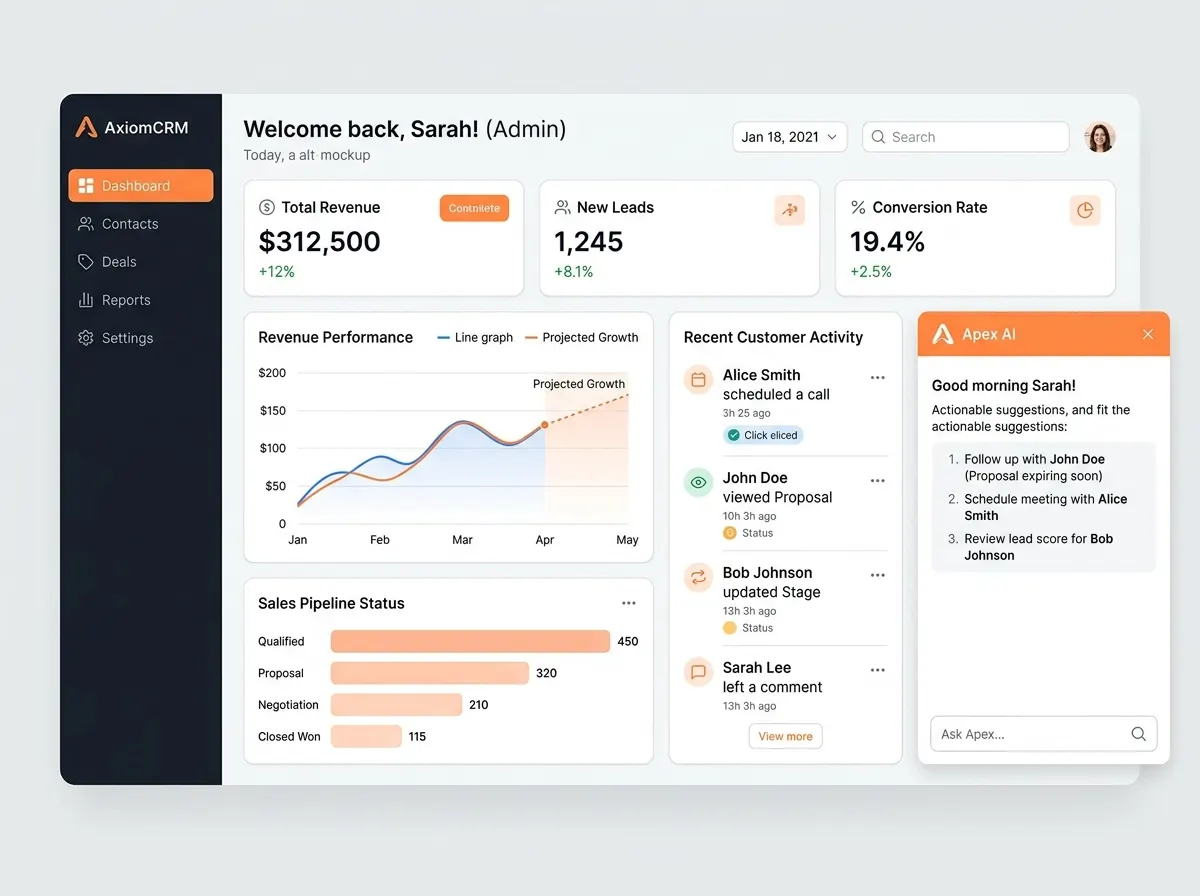
Net-Banking Ecosystem
Build a secure banking portal using Java, Spring Boot, React and PostgreSQL.
- Customer contact & lead management pipeline
- Automated summary insights with AI APIs
- Protected authentication & role permissions
- PostgreSQL database with indexed search
E-Commerce Microservices
Build a distributed e-commerce system with API Gateway, service discovery and React storefront.
- API Gateway routing with service discovery
- Kafka event streaming between microservices
- Inter-service REST communication with Spring Boot
- React storefront for catalog and checkout
Health Insurance Vault
Build a centralized claim processing system with complex business logic and audit logs.
- Multi-tenant data partitioning in PostgreSQL
- Interactive time-series metric charting in React
- Exportable reporting engine with Spring Boot backend
- Responsive analytics layout with metric cards
Build Your Own Production-Style Full Stack Application
Take everything you learned and build a complete application from: Requirement → UI → Backend → Database → API → Authentication → Deployment
YOUR FINAL PORTFOLIO CAN INCLUDE:
What You Get Beyond Technical Training
We Don't Stop at the Last Class.
Learning to code is only one part of becoming interview-ready. Your career preparation includes:
01 — Resume Preparation
01 — Resume Preparation
Create a developer-focused resume highlighting your technical skills and projects.
Why AIDEAS Academy?
Learn. Build. Prepare. Get Career Support.
Designed from the ground up for career switchers, fresh graduates, and ambitious engineers seeking practical, production-grade technical skills.
Industry-Oriented Curriculum
Learn technologies and workflows used in modern software development.
Hands-On Learning
Apply concepts by building applications instead of only watching demonstrations.
Live + Recorded Learning
Attend live sessions and use recordings for revision.
Beginner-Friendly Approach
Start from programming fundamentals and progress toward advanced development.
Real-World Projects
Build portfolio-oriented applications based on practical development scenarios.
Career Preparation
Resume guidance, mock interviews, technical preparation and placement assistance.
Expert Guidance
Learn with trainers and mentors focused on practical development skills.
A Complete Java Full Stack Developer Stack
Work with industry-standard frameworks, libraries, cloud platforms and AI protocols.
FRONTEND
BACKEND
DATABASE
DEVELOPMENT
DEVOPS & CLOUD
AI
What Can You Do After Learning Java Full Stack?
Explore Multiple Technology Career Paths
Your Java Full Stack skills can prepare you for roles such as:
The actual role and compensation you qualify for will depend on your skills, projects, experience, interview performance and the employer.
Is This Course Right For You?
You Can Start Even If You Are Starting From Zero.
This Program Is Suitable For:
- ✓Fresh Graduates
- ✓Engineering Graduates
- ✓Non-IT Graduates
- ✓Students
- ✓Working Professionals
- ✓Career Switchers
- ✓Junior Developers
- ✓Professionals Looking to Upgrade Their Skills
You Don't Need:
- ✕Advanced Programming Knowledge
- ✕Previous Full Stack Experience
- ✕Professional Software Development Experience
You Do Need:
- ✓A willingness to learn
- ✓Regular practice
- ✓A laptop/computer
- ✓Consistent participation
- ✓Commitment to building projects
Your Java Full Stack Career Roadmap
Progress from fundamentals to production code and verified interview readiness.
Zero to Production Full Stack Engineer
Continuous 9-stage roadmap spanning fundamentals, modern UI, backend engineering, and career launch.
Learn Java
Core Java syntax, OOP concepts, collections, exception handling, multithreading, and problem-solving logic.
Learn Web Development
Semantic HTML5, modern CSS styling, responsive flexbox/grid, and core JavaScript DOM manipulation.
Master React
React component architecture, state management with hooks, SPA routing, and interactive frontend interfaces.
Master Spring Boot & APIs
Spring Boot framework, MVC architecture, Spring Data JPA, RESTful API design, serialization, and Spring Security.
Work With Databases
Relational database schema modeling, SQL queries, indexing, JPA/Hibernate integration, and NoSQL storage with MongoDB.
Build Full Stack Projects
End-to-end full stack architecture connecting React frontend, Spring Boot REST API backend, and PostgreSQL database.
Deploy Applications
Docker containerization, CI/CD pipeline automation, cloud hosting on AWS EC2/S3, and live production environment config.
Prepare for Interviews
Technical DSA & Java questions, system design fundamentals, portfolio code review, and high-intensity mock interviews.
Start Applying for Developer Opportunities
Connect with hiring partners across Hyderabad & PAN India, active job applications, and ongoing placement mentorship.
Qualify for In-Demand Developer Opportunities
Connect with our network of 150+ hiring partners across Hyderabad & PAN India, participate in technical mock interviews, and graduate with a verified live project portfolio.
AIDEAS Academy By The Numbers
See What Our Students Say
Real Students. Real Learning Experiences.
Rahul Sharma
Java Full Stack • Batch 2024
“I shifted from manual testing to Java full stack development. The Spring Boot, Microservices, and REST API modules are very detailed. I built a complete Net-Banking portal which impressed my interviewers.”
Sneha Rao
Wipro“The combination of Core Java, Hibernate, and Spring Boot in this course is exceptional. The concepts I learned here are applied every day in my current enterprise project.”
“Microservices and Kafka coverage was top notch. I learned how to build high-performance APIs and handle event streaming. The mock interviews helped me crack technical rounds with ease.”
Karthik Varma
Spring Boot Developer @ Infosys
“Coming from a Non-IT background, programming was intimidating. The hands-on coding assignments and daily doubt support at AIDEAS made Java and React full stack logic very intuitive.”
Ananya Reddy
Full Stack Engineer • Cognizant
Rahul Sharma
Java Full Stack • Batch 2024
“I shifted from manual testing to Java full stack development. The Spring Boot, Microservices, and REST API modules are very detailed. I built a complete Net-Banking portal which impressed my interviewers.”
Sneha Rao
Wipro“The combination of Core Java, Hibernate, and Spring Boot in this course is exceptional. The concepts I learned here are applied every day in my current enterprise project.”
“Microservices and Kafka coverage was top notch. I learned how to build high-performance APIs and handle event streaming. The mock interviews helped me crack technical rounds with ease.”
Karthik Varma
Spring Boot Developer @ Infosys
“Coming from a Non-IT background, programming was intimidating. The hands-on coding assignments and daily doubt support at AIDEAS made Java and React full stack logic very intuitive.”
Ananya Reddy
Full Stack Engineer • Cognizant
“The Docker, Kubernetes, and AWS deployment module is a complete game-changer. Interviewers were surprised that I knew about microservices orchestration and CI/CD at a fresher level.”
Vikram Joshi
Cloud Backend Engineer @ Capgemini
“Placement support is 100% genuine. They refined my resume, conducted 5 rounds of mock interviews, and referred me directly. I received multiple job offers.”
Pooja Patel
Software Developer • Tech Mahindra
Sai Teja
Java Full Stack Capstone • Batch 2024
“The project-based curriculum is what sets AIDEAS apart. We built a distributed e-commerce microservices system and net-banking portal. That portfolio alone got me shortlisted everywhere.”
Divya M
Accenture“I had zero enterprise software experience. They started with Core Java and took us to Spring Boot, React, and GenAI APIs. The mentorship and code reviews were outstanding.”
“The Docker, Kubernetes, and AWS deployment module is a complete game-changer. Interviewers were surprised that I knew about microservices orchestration and CI/CD at a fresher level.”
Vikram Joshi
Cloud Backend Engineer @ Capgemini
“Placement support is 100% genuine. They refined my resume, conducted 5 rounds of mock interviews, and referred me directly. I received multiple job offers.”
Pooja Patel
Software Developer • Tech Mahindra
Sai Teja
Java Full Stack Capstone • Batch 2024
“The project-based curriculum is what sets AIDEAS apart. We built a distributed e-commerce microservices system and net-banking portal. That portfolio alone got me shortlisted everywhere.”
Divya M
Accenture“I had zero enterprise software experience. They started with Core Java and took us to Spring Boot, React, and GenAI APIs. The mentorship and code reviews were outstanding.”
What Makes Our Java Full Stack Program Different?
Most Courses Teach Technologies. We Focus on the Complete Journey.
Learn
Understand the concepts from the foundation.
Practice
Solve coding problems and work through guided exercises.
Build
Create real applications using the technologies you learn.
Deploy
Learn how applications are prepared and deployed.
Prepare
Build your resume, GitHub profile and interview skills.
Apply
Get career guidance and placement assistance.
FREE JAVA FULL STACK DEMO CLASS
Not Sure If Java Full Stack Is Right for You?
Don't decide based on a brochure.
Attend a Free Demo Session.
In the demo, discover:
No obligation. Speak with a course counsellor and understand the program first.
Frequently Asked Questions
Everything you need to know about the curriculum, eligibility, projects, and admissions.
No. The program starts with programming fundamentals and progressively moves into frontend, backend, databases, APIs and deployment.
Yes. The program is structured to build skills progressively, making it suitable for students and fresh graduates who are willing to practice consistently.
Yes. You can start from the programming fundamentals and build your skills step by step.
The program covers Java, Spring Boot, Hibernate, Microservices, REST APIs, React JS, HTML, CSS, JavaScript, SQL, PostgreSQL, Git, GitHub, Docker, AWS fundamentals and AI integration.
Yes. The current curriculum includes AI integration using APIs such as OpenAI and focuses on building AI-enabled web applications.
AIDEAS Academy provides placement assistance and career support. Do not present this as a guaranteed job unless the applicable written terms and eligibility conditions support that claim.
The program includes live training along with recorded sessions for revision.
Yes. Discuss the available schedules and learning format with the course counsellor.
Course fees and available offers can vary by batch and learning format. Submit the form to receive the current fee, batch and payment details.
Your Next Step Is Simple
Don't Spend Months Learning Random Tutorials.
Java → React → Spring Boot → APIs → Database → Full Stack → Deployment → Projects → Interview Preparation
Start Your Java Full Stack Journey With AIDEAS Academy
Learn the skills. Build the projects. Prepare for the opportunities.